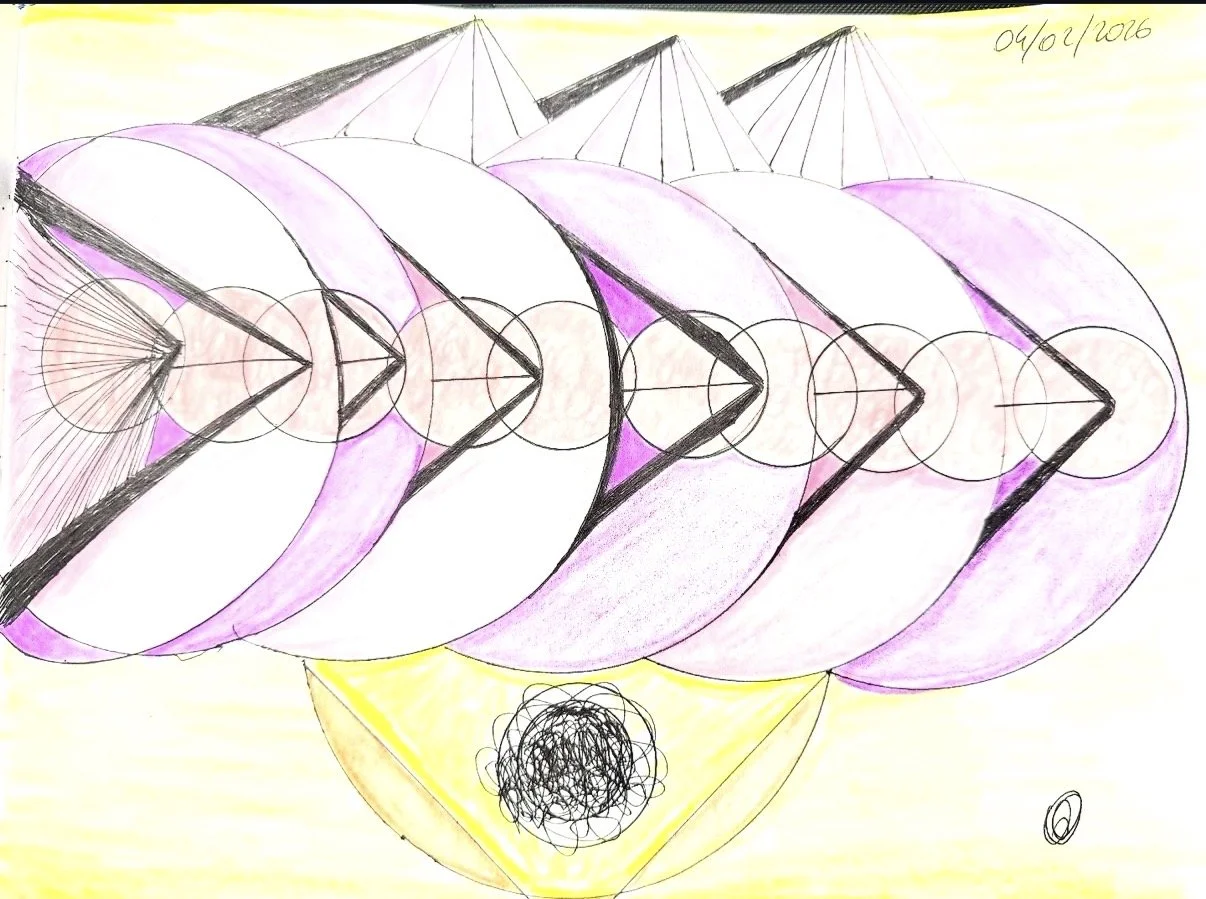
Gravity (Hypothesis)
Sulfur (S8) + Chlorine (Cl) + Oxygen (O)
Oxygen: present in air.
Combination:
Sulfur S8 → 8 atoms bonded together in a closed zig-zag ring structure.
S8 + Cl + O3
→ A nebula collapses and expands until it encounters S (sulfur or hydrogen sulfide) in quantities that may be small, as long as they are sufficient to feed the explosion of a star.
Sulfur is a combustible element characterized by a bluish flame that emits sulfur dioxide (SO2), a toxic, suffocating, colorless gas.
Sulfur burns slowly in air, but the combustion becomes faster when oxygen concentration is high.
Sulfur burns by reacting with oxygen to form sulfur dioxide:
S + O₂ → SO₂
→ sulfurous anhydride (sulfur dioxide)
What counteracts combustion?
Possibly:
the heat of the surrounding environment itself
electrons in a stable natural configuration
or temperatures above about 250°C, where combustion occurs
Thus around 300–350°C, compounds such as carbon dioxide (CO₂) or hydrogen sulfide (H₂S) may form.
H₂S → acts as an antioxidant, preventing oxygen from bonding with sulfur because hydrogen bonds with sulfur instead.
I believe that oxygen and sulfur in combustion form intermediate states before generating carbon dioxide.
Above 250–300°C, the substances separate and transform.
The combustion itself produces energy that pushes atoms and molecules apart.
Sulfur dioxide and carbon dioxide are products of sulfur–oxygen reactions after combustion.
At about 300°C → physical state changes of sulfur occur.
Gravity
How are salt and sulfur connected, and how do they exert pressure on bodies?
I believe through elements such as:
oxygen
chlorine
sodium
calcium
magnesium
potassium
sulfur itself
These appear in natural gases, such as those found:
in the human stomach
in soil
in volcanoes
in water
in galactic nebulae
in the Earth
in sulfuric waters of ancient thermal springs
These factors limit the expansion of bodies, while making them subject to gravitational laws and potentially flammable.
Note
In the sea, sodium and chlorine form salt (NaCl) in higher percentages than sulfur (S8).
Because of this, the sea suppresses explosions and fire, although it evaporates due to oxygen interactions.
Oxygen in the sea:
O₂
Water molecule → H₂O
Marine water molecule (conceptual): SH₂O
Magnet and Magnetism
Magnetism → fills empty space (connection).
Magnet → bodies with different charges attract each other, while bodies with equal charges repel each other.
Law of Symmetry and Contrast
Like sulfur and oxygen, Nature often proceeds by opposition.
In magnetism:
identical poles repel (North–North, South–South)
opposite poles attract (North–South)
This reflects a need for energetic balance.
A physical system always tends toward a state of minimum energy (equilibrium).
Two identical poles placed close together accumulate enormous potential energy; by repelling they attempt to release that tension.
Electric Charges vs Magnetic Poles
There is a difference in the structure that hosts electric charges and magnetic poles.
Electricity (monopoles):
An object can be only positive or only negative.
Magnetism (dipoles):
You never have an isolated pole.
If a magnet is cut in half, you obtain two smaller magnets, each with its own North and South pole.
Intuition
Magnetism is like a coin.
No matter how much you divide it, it always has two sides.
This happens because magnetism is generated by the movement of electrons inside atoms.
Action at a Distance: The Magnetic Field
How can two bodies feel each other and repel without touching?
Through a field.
The electromagnetic field can be imagined as lines extending from the North pole and entering the South pole.
When opposite poles approach:
field lines align
they connect like elastic bands
they pull the magnets together
When identical poles approach:
field lines collide and bend backward
creating real physical pressure, perceived as resistance.
Electron Spin
Everything originates from electron spin.
Each electron rotates.
In ordinary iron, electrons spin in many directions, canceling each other.
In a magnet, they are aligned in the same direction.
When a magnet approaches a metal, it orders the electrons in the metal to align.
If alignment occurs → attraction or repulsion appears.
Heat and Magnetism
Heat separates atoms, but the effect depends on temperature.
In magnetism:
If a magnet is heated beyond the Curie temperature, it loses magnetism.
Examples:
Iron → 770°C
Cobalt → 1127°C
Nickel → 358°C
Neodymium → 400°C
Thermal disorder shakes atoms enough to break electron alignment.
The magnet instantly loses its magnetic force.
What Makes Birds Fly?
Pressure difference
Air below pushes upward more than the air above pushes downward.Biological composition hypothesis
Less calcium and sodium, more hydrogen, sulfur, potassium, helium.Rapid biochemical energy processes powering muscles
(about 25% of body mass).Respiratory system
Birds inhale and exhale oxygen efficiently.Feather barbules
They create a continuous, air-resistant surface that birds adjust similarly to aligning magnetic poles or electrons.
Chemical Formula for a Gravitational Process (Hypothesis)
NaCl + S8 → salt + sulfur (sea salt)
Base compound for what?
NaCl + S8 + H + Hz
Where Hz represents energy related to motion or levitation, possibly associated with helium.
Missing element: Helium.
NaCl + S8 + H + Hz − Ca − K − Mg − Na
Therefore:
(Cl + S8 + H) × Hz
Magnesium may influence flight capability or altitude limits, depending on the mass/weight ratio.
(Mg + Cl + S8 + H) × Hz
Final Formula (Hypothesis)
(Mg + NaCl + S8 + H) × 428 Hz → absence of gravity / levitation
Mechanical relation:
Fm = (br × Fr) / bm
Where:
Fm = driving force
br = resistant arm
Fr = resistant force
bm = motor arm
Expanded expression:
(Mg + NaCl + S8 + H) × Fm/Fr × 428 Hz
Movement force / resistance force → forward gravity.
Molecular mass calculation
Mg = 24.305 g/mol
NaCl = 58.44 g/mol
S8 = 3.206 g/mol
H = 1.008 g/mol
Total:
95.813 g/mol
× 0.75 N
(assuming Fm/Fr ≈ 1/4 or 1/3)
95.813 g/mol × 0.75 N / 7.83 Hz
7.83 Hz → natural Earth resonance.
Resulting coefficient (hypothetical):
≈ 935.86 N
Stability number
935.86 N × 428 Hz
or
935.86 N / 428 Hz
→ force coefficients related to motion.
Human Force Example
Human mass example: 45 kg
Formula:
F = m × g
m = 0.045 kg
g = 9.80665 m/s²
F = 0.44129925 N
54.661558736 N × 0.44129925 N
≈ 24.12 N
Estimated acceleration needed for human flight (hypothesis).
Additional elements considered:
Mercury
Ozone
Hydrogen
Helium
Oksana Alesi Koshla, 13/03/2026